Listen
Space for positive, difficult and mixed experiences, with no expected answer.
ART · COMMUNITY · HEALTH
Bringing together the voices of families of African and African-Slovenian heritage, artistic expression and learning in healthcare.
Invitation to interviews
Understanding through art
African perspectives in healthcare
Guidance for fairer care
Weaving dialogue between community and healthcare
Different experiences. A shared space for conversation.
01 / ABOUT THE PROJECT
How can healthcare better respond to each child and family? R.A.S.T. / A.R.T.S. explores this question through conversations, creative workshops and dialogue with professionals.
We listen to experiences that show what works well in healthcare, where difficulties arise and which changes would matter most to families. The collected material will inform practical recommendations and learning resources for healthcare professionals.
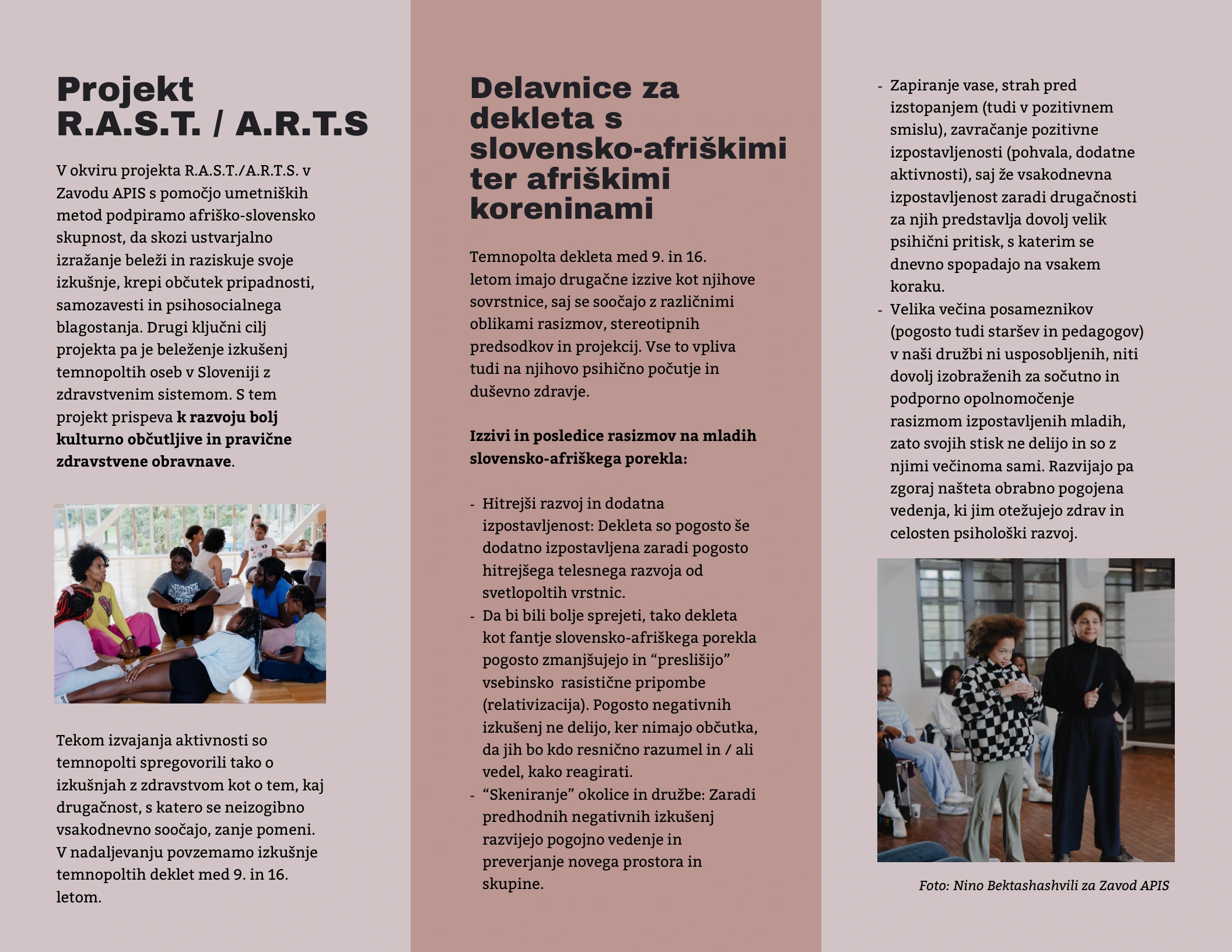
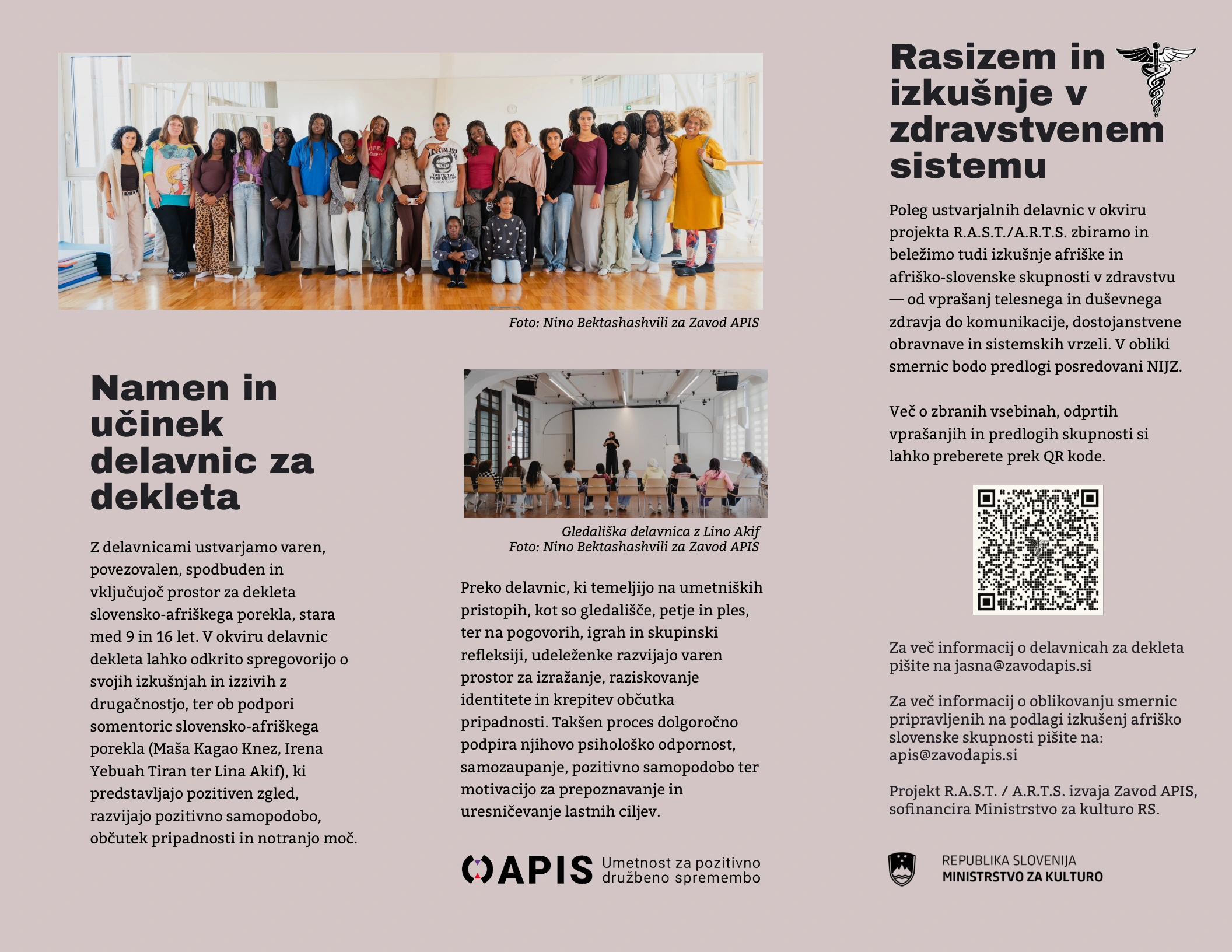
Space for positive, difficult and mixed experiences, with no expected answer.
Storytelling, theatre, movement and visual expression help communicate experiences that can be difficult to put into words.
We bring community knowledge into professional learning for respectful, person-centred care.
02 / ACTIVITIES
The project connects community experiences, artistic practice and the development of resources for healthcare professionals.
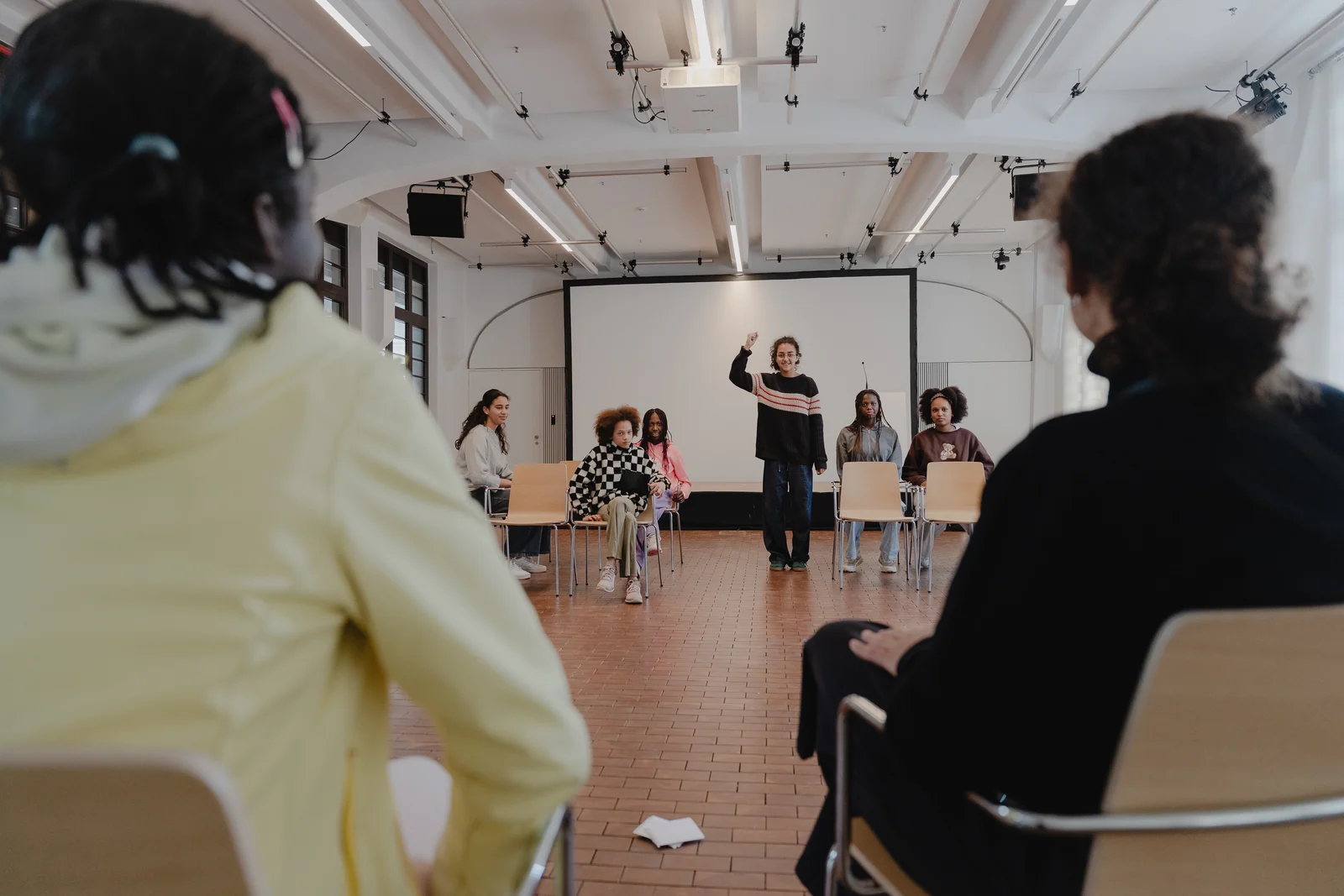
Storytelling, theatre improvisation, movement, rhythm, voice and visual expression create space to explore experiences, identity and belonging.
Artistic mentorship is provided by recognised artists of African-Slovenian heritage Maša Kagao Knez, Irena Yebuah Tiran and Lina Akif. They use arts-based approaches in their work with young people of African-Slovenian and African heritage, supporting them to create and express their own stories.
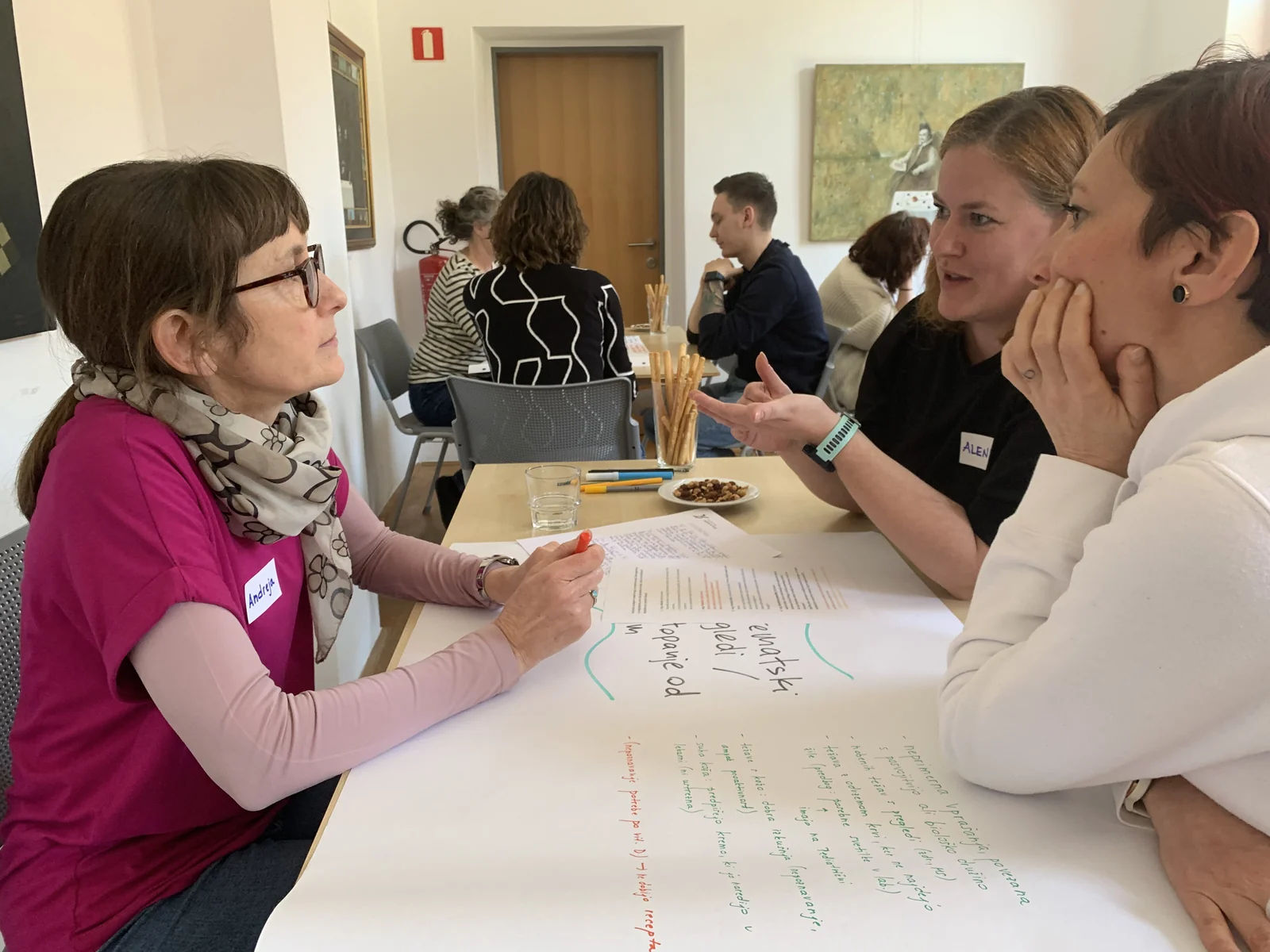
Community discussions and individual interviews gather positive, difficult and mixed experiences of healthcare in Slovenia.
The Ljubljana conversation brought forward questions about routine health checks, how children’s development is assessed, and access to knowledge about darker skin and Afro-textured hair care. Parents also highlighted mental health, experiences of racism and stereotyping, and the need for respectful communication and privacy, particularly when discussing adoption and family history.
Alongside the challenges, they shared positive experiences with paediatricians who seek further knowledge and actively support families.
We organise accounts by theme and connect them with professional perspectives on communication, children’s care, mental health and access to support.
Community experiences and artistic approaches inform practical recommendations and learning resources for healthcare professionals.
RELATED PROGRAMMES
R.A.S.T. / A.R.T.S. builds on APIS’s work with girls of African and African-Slovenian heritage. These programmes from 2025 provide context for that work.
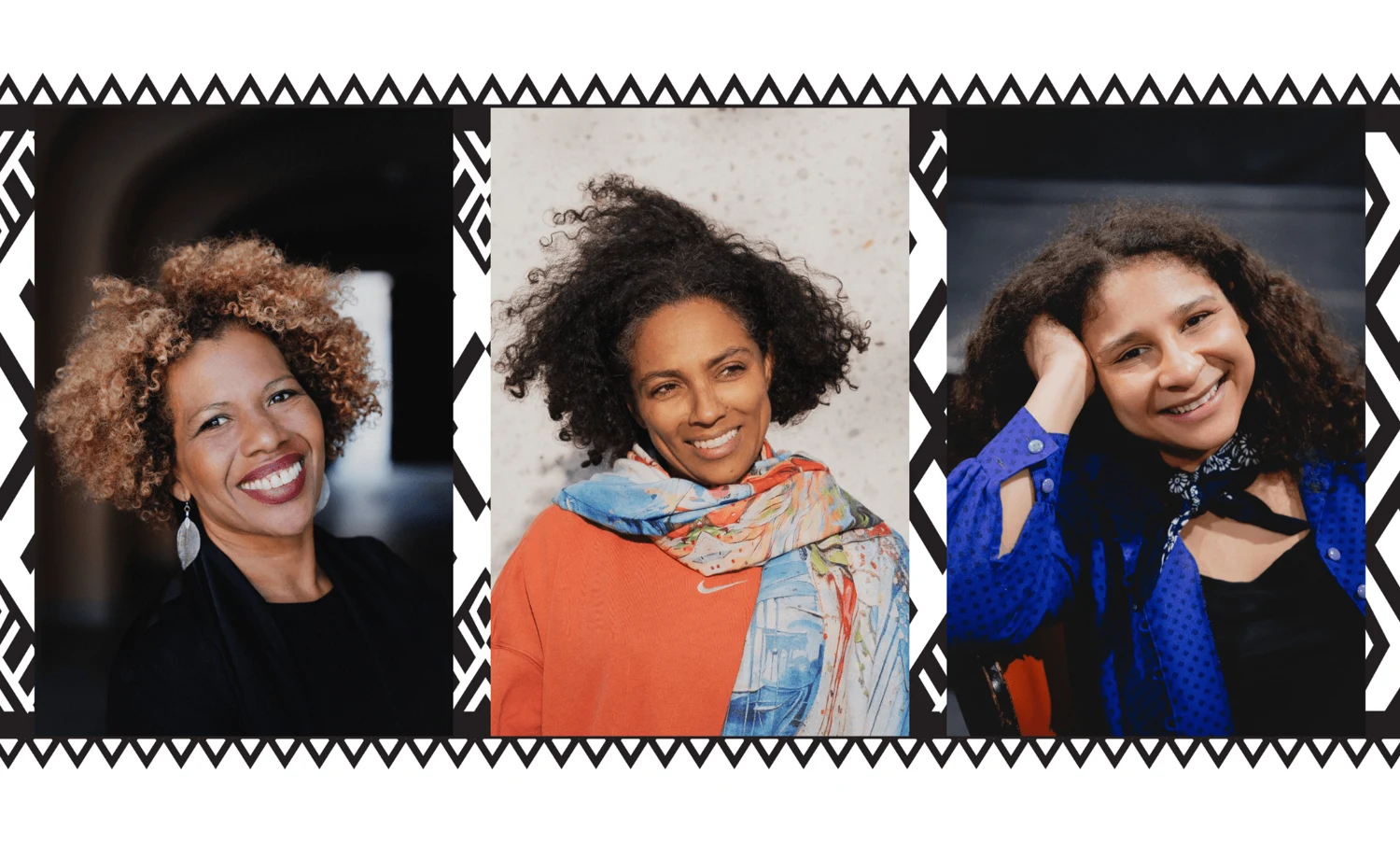
The publication and creative workshop connect the stories of artists Maša Kagao Knez, Irena Yebuah Tiran and Lina Akif with questions of identity and belonging.
About the publication and workshopLed by Jasna Gabrovšek, the programme brings together creative workshops, conversation and support for girls of African and African-Slovenian heritage. The girls were mentored by recognised artists of African-Slovenian heritage: Maša Kagao Knez, Irena Yebuah Tiran and Lina Akif.
Explore the ROOTS workshops03 / OUR CONVERSATIONS
These are starting points for a conversation. Each participant chooses which experiences they wish to share.
Understandable explanations, language, listening, privacy and personal boundaries.
Care that responds to the child’s individual needs, development and opportunities to take part in conversations.
Emotional safety, belonging and access to support when a family needs it.
What staff do well, what helps build trust and which changes would be useful.
04 / FROM EXPERIENCES TO RESOURCES
Conversations, anecdotes and creative workshops.
A thematic review of experiences and dialogue with professionals.
Developing recommendations and educational materials for healthcare professionals.
The National Institute of Public Health of Slovenia (NIJZ) supported the project application through a letter of support. It envisaged professional guidance, knowledge exchange on intercultural mediation and opportunities to share the results.
Recommendations and learning resources are in development.
05 / TEAM
The project brings together experience in the arts, community work, public health and inclusive programme development.
Community coordination · interviews in Slovenian
Storyteller, comparative literature graduate and APIS collaborator. She leads creative activities for girls of African and African-Slovenian heritage and makes space for less-heard experiences. She is the author of Umetnost dvojne pripadnosti (The Art of Dual Belonging). She also conducts the project’s interviews in Slovenian.
Artistic collaborator · dance and movement
Dancer, choreographer, dance educator and theatre practitioner. Her work brings together contemporary dance, African dance traditions and theatre. She co-mentored a creative workshop within The Art of Dual Belonging programme.
Artistic collaborator · music and voice
Mezzo-soprano and singing educator with experience in opera, concert performance and contemporary music. She is one of the artists featured in Umetnost dvojne pripadnosti (The Art of Dual Belonging).
Artistic collaborator · theatre
Actor and performance artist, and a member of the Mladinsko Theatre ensemble. Her work includes devised and socially engaged theatre. She is one of the artists featured in Umetnost dvojne pripadnosti (The Art of Dual Belonging).
Public health · interviews in English
A public health professional with a background in clinical medicine. She holds a Master of Public Health from the University of Chester and is completing a doctorate in public health at the University of Ljubljana. Her work focuses on migration, mental health, health equity and social inclusion. She conducts the project’s interviews in English.
Intercultural mediation · interviews in English and Arabic
An intercultural mediator and creative practitioner based in Slovenia. He studied international relations in Morocco. He speaks Arabic, English and Slovenian and is familiar with several Arabic dialects. He has experience working with international and local organisations and connecting people across linguistic and cultural backgrounds. He conducts the project’s interviews in English and Arabic.
In-depth conversations in Slovenian and connections with the community.
Profile and referencesIn-depth conversations in Slovenian and support with organisation and preparation of resources.
Profile and referencesProject lead · interviews in Slovenian
Co-founder and programme director of APIS Institute. She develops and leads projects connecting the arts, storytelling, human rights and social inclusion. She leads the project’s content development and coordination and also conducts interviews in Slovenian.
06 / TAKE PART
Are you a parent or carer of a child of African or African-Slovenian heritage? Adoptive families and families from the African diaspora are also welcome.
You do not need to have had a particularly difficult experience. A kind interaction, a helpful explanation or a time when you felt understood matters too.
Adults of African heritage with their own experiences of healthcare, and healthcare professionals with relevant experience, are also welcome to get in touch.
Choose your language and suggest two different dates and times up to and including 5 November 2026. Listed times are suggestions; we confirm appointments by email.
Send this message to romana@zavodapis.si; Romana will forward your registration and arrange the appointment.
BEFORE THE CONVERSATION
No. Your preferred language and availability are enough for the first contact. We will discuss your experiences during the interview; please do not send medical details or children’s names in your registration.
Romana Zajec receives your registration and forwards it to an interviewer for your chosen language. We agree the appointment by email and send information and a Zoom link if needed. Your chosen time is a suggestion and is agreed once confirmed.
Yes. Taking part is voluntary. You may skip any question or end the conversation at any time.
Before the interview, you will receive information about its purpose, recording, use and protection of the material, together with a consent form. Any proposed public or artistic use will be agreed within the permissions you give.
Registration requires your email address, preferred language and two proposed times. The form prepares a message in your browser; you send it yourself. Romana Zajec receives these details and forwards them to the appropriate interviewer to arrange the conversation. For questions about your data, contact jasna@zavodapis.si.